
Roads are the lifeblood of modern societies. Every day, millions of people and vehicles use roads to ensure safe and comfortable transportation. Safe, durable, and sustainable roads are an indispensable part of both economic development and daily life. At this point, road structures, and especially concrete roads, play a critical role.
Concrete roads have become an essential component of modern infrastructure projects. With their advanced durability, low maintenance costs, and long service life, concrete roads are an ideal choice. This article will explore why concrete roads are so important, their advantages over other paving types, and their applications in detail.
Types of Road Structures
Road structures are durable constructions designed to safely and comfortably carry vehicle traffic. There are fundamentally three types of road structures: rigid pavements, flexible pavements, and composite pavements.
-
Rigid Pavements
Rigid pavements use hydraulic binders, including cement, to spread loads over a wide area and transfer them to the sub-layers. They offer high strength and durability, resulting in a long service life. -
Flexible Pavements
Flexible pavements use bitumen as a binder and transmit loads over a narrower area due to their flexible nature. They are constructed with more layers and thicker sub-layers. -
Composite Pavements
Composite pavements combine rigid and flexible pavements to utilize the advantages of both types. They are typically used when improvements are needed on existing surfaces, with a second layer being added based on various engineering parameters.
Concrete Roads as a Type of Road Structure
-
Rigid Pavements (Concrete Roads) and General Characteristics
Concrete roads work like a beam, distributing traffic loads over a wide area through a few layers, resulting in high strength and long service life. The main advantages of concrete roads are:- High Strength: Concrete roads have a high capacity for carrying heavy loads.
- Long Service Life: They have a much longer lifespan compared to other paving types.
- Low Maintenance Costs: They provide economic benefits with low maintenance requirements throughout their long service life.
History of Concrete Roads
-
First Concrete Roads Worldwide
The history of concrete roads dates back to the late 19th century. Early examples of concrete roads appeared in the United States, Australia, and Europe. The first concrete road in the U.S. was Court Avenue in Ohio, constructed in 1891. This road, built as a pioneering project promising "a road free from mud and dust," still serves as an excellent example of concrete roads' longevity. Today, the foundation of over 270,000 km of concrete road networks in the U.S. was laid with projects from over 100 years ago.The world's oldest concrete road has been in service since 1891!
Australia was an early adopter of concrete road technology. Victoria Parade in Melbourne, built in 1928, was Australia's first concrete road project, designed to test the durability and longevity of concrete roads. The project successfully demonstrated concrete roads' high strength, and Victoria Parade remains in use today, serving as a striking example of concrete roads' longevity. This project led to the widespread adoption of concrete road construction in Australia.
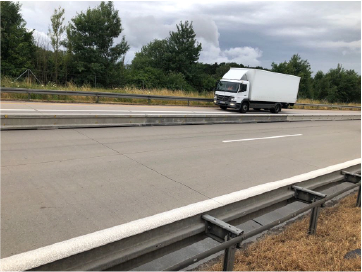
In Germany, the first concrete road was built in 1888 in the city of Wroclaw, now part of Poland. Starting in the 1920s, concrete highways showcased advanced German engineering applications. These roads, which were exposed to heavy military loads during World War II, proved the high strength and long service life of concrete roads. Today, German highways utilize double-layer concrete road technology, resulting in low noise levels and high driving comfort.
The Berlin A10 Highway – Europe's Longest Concrete Highway
Belgium was another early adopter of concrete roads in Europe. The first concrete road in Belgium, built in 1925, served for 78 years. The successful application of concrete roads led to the adoption of continuously reinforced concrete pavement (CRCP) in 1950. Today, many highways in Belgium, built since the 1970s, continue to use CRCP technology and remain in service for over 70 years.
Early Use and Development of Concrete Roads in Our Country
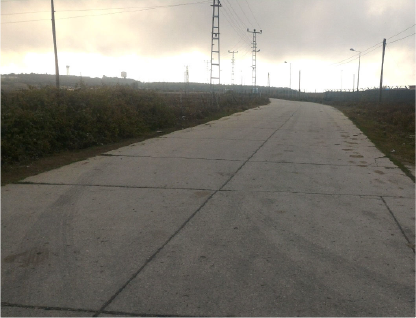
While the U.S. and European countries were the first to widely use concrete roads, the history of concrete roads in our country dates back quite far. The first concrete road in Turkey, built in Sinop in 1953, served high-traffic areas like the NATO Radar Station and is still in service today. Despite over 80 years of use, this road remains functional without needing repairs, exemplifying the technical superiority of concrete roads. Similarly, the first concrete roads in Trabzon (1958) and Adana (1959) demonstrated high durability and low maintenance costs, leading to the development of over 21,000 km of concrete roads in Turkey.
The Oldest Concrete Road in Our Country Has Been in Service Since 1953 with Zero Maintenance Needs!
Applications of Concrete Roads
Concrete roads are widely preferred in various applications due to their strengths and the solutions they offer. Some of these applications include:
-
Roads
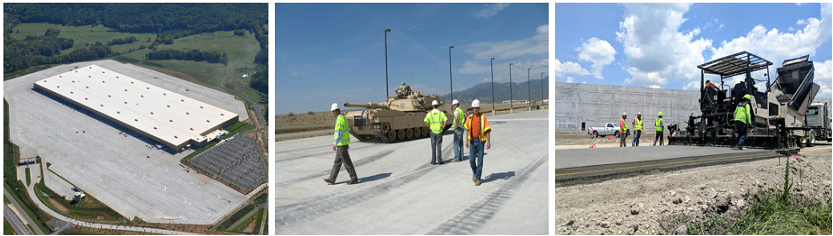
Concrete roads are durable under heavy vehicle traffic and require minimal maintenance over their long service life. Their inorganic structure makes them fire-resistant and highly resilient to natural disasters, making them a popular choice for highways. -
Airports
Airport pavements endure much heavier traffic loads compared to roads. Concrete roads offer an ideal solution for airports with their high strength and durability. -
Industrial Areas
Concrete roads are commonly used in industrial areas and storage sites due to their high load-bearing capacity and durability. -
Ports
Ports are exposed to heavy loads and equipment used for transporting these loads. Concrete roads are preferred in ports for their ability to handle heavy loads and provide a smooth driving surface, which is crucial for sensitive equipment.
Concrete pavements are chosen for many applications due to their technical advantages.
Types of Concrete Roads
Concrete roads come in five main types, each suited to different applications:
-
Jointed Plain Concrete Pavements (JPCP)
JPCP is a type of concrete road without continuous reinforcement but uses slip and tie bars at joints, making it an economical option with a long service life. This method is still successfully used for highways in the U.S. -
Jointed Reinforced Concrete Pavements (JRCP)
JRCP includes certain amounts of steel mesh or other reinforcements, allowing for wider joint spacing. This type is still in use in the U.S. -
Continuously Reinforced Concrete Pavements (CRCP)
CRCP uses continuous reinforcement in both directions, allowing for construction without joints. This type is widely used in Europe, including Belgium, due to its high comfort and low traffic noise. -
Roller Compacted Concrete Roads (RCC)
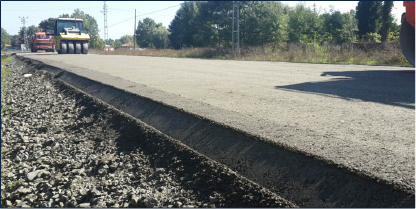
RCC combines the speed and ease of asphalt with the durability of concrete. It can be constructed quickly, without reinforcement, and with high strength and durability. RCC is commonly used in industrial areas, ports, military facilities, and roads.
Conclusion
Concrete roads are an essential part of modern infrastructure projects due to their high strength, durability, low maintenance costs, and long service life. With over 130 years of successful implementation worldwide, concrete road technology continues to advance and offer diverse solutions.